
Ghana’s Flood Crisis: Why Rain Is Not the Only Problem But Citizens Too.
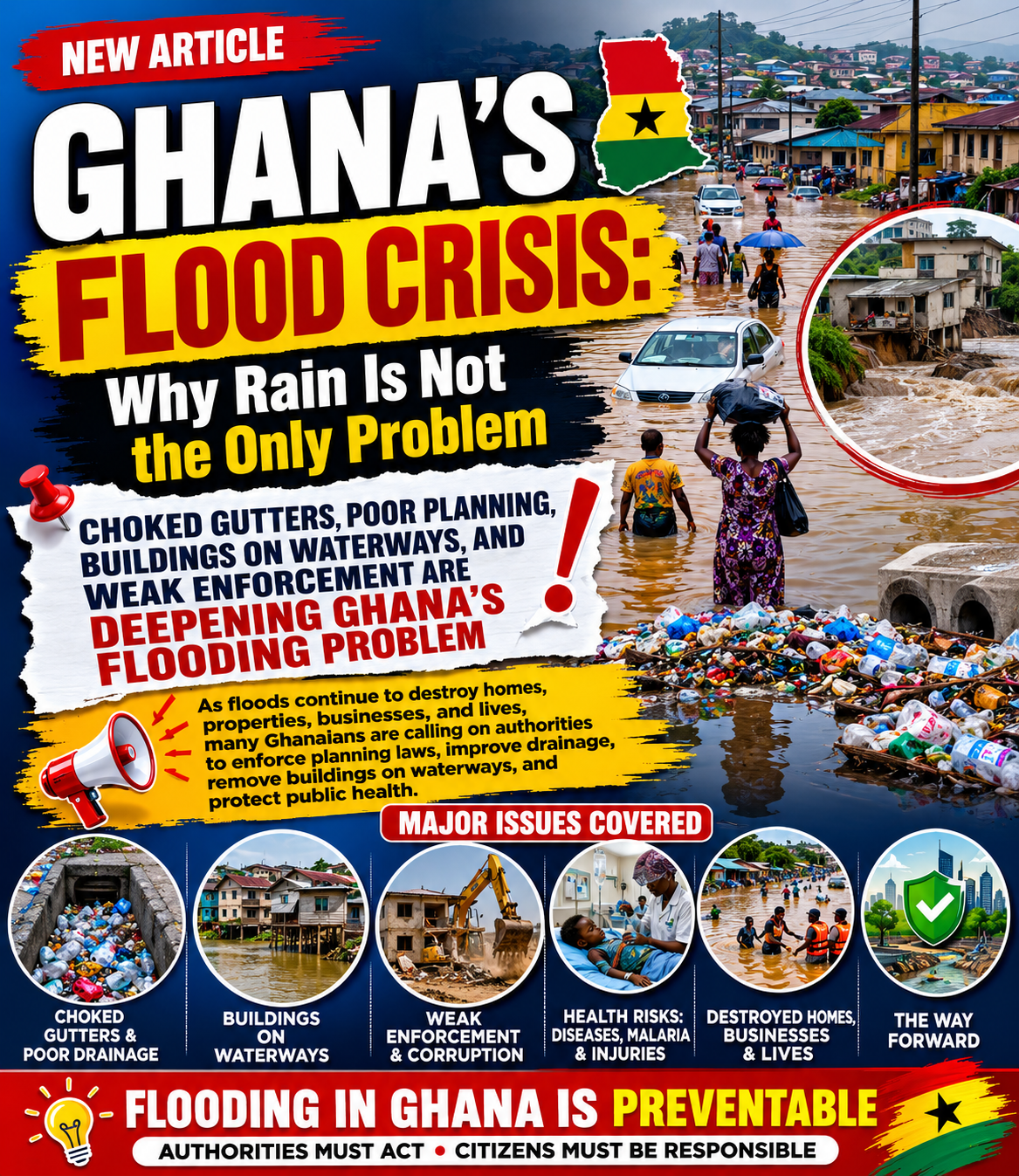
Choked Gutters, Poor Planning, Buildings on Waterways, and Weak Enforcement Are Deepening Ghana’s Flooding Problem a second look.
What happens when authorities permit someone to build on waterways, do you think they took bribe or that officer is lawless or he/she is not an expert in that field?
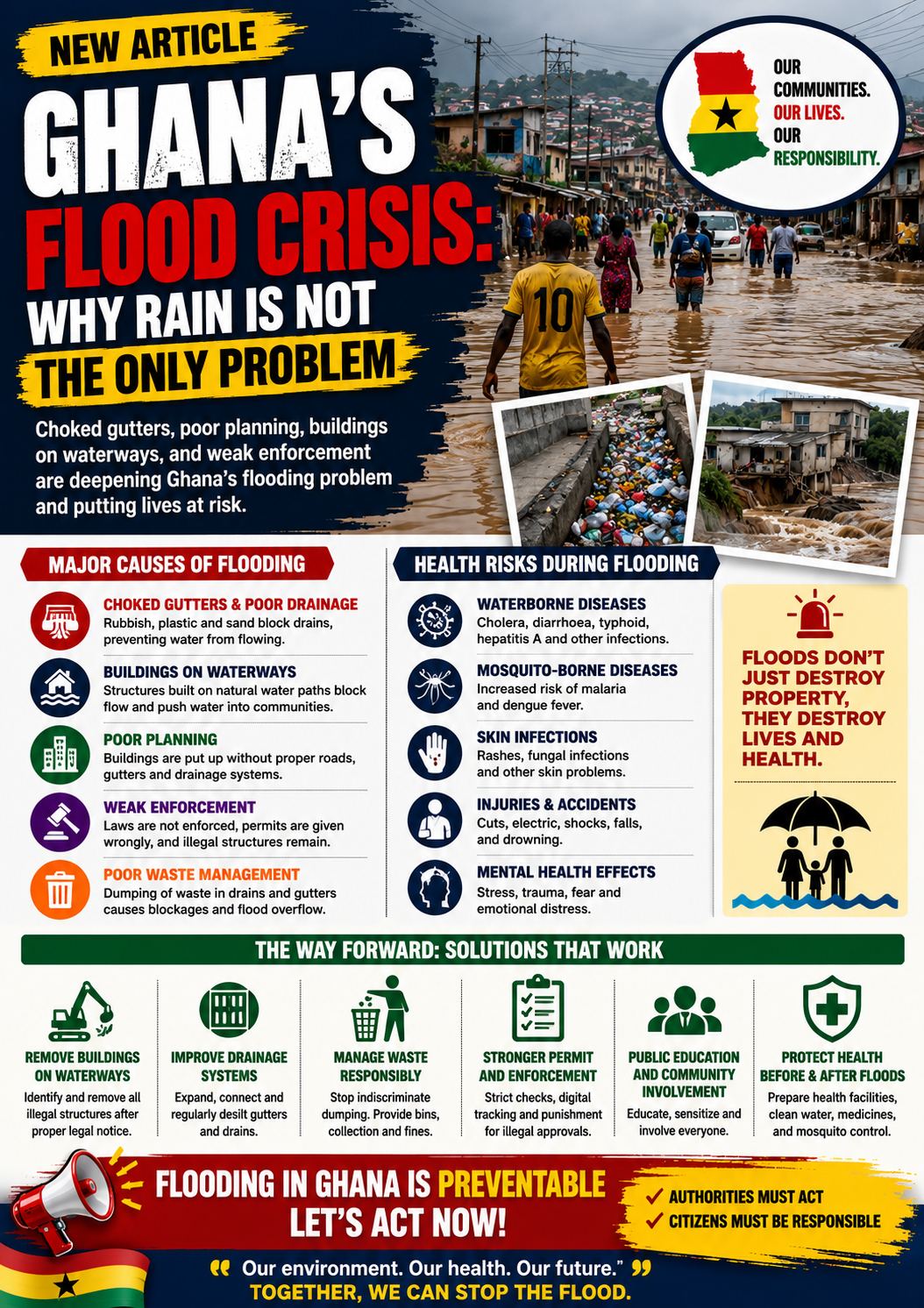
Flooding has become one of the serious problems facing many communities in Ghana. Each year, heavy rains destroy homes, roads, shops, schools, and properties. In some cases, lives are lost. Many people blame the rain, but the truth is that flooding in Ghana is not caused by rainfall alone. It is also caused by poor planning, choked gutters, weak enforcement of building laws, and the failure of authorities and citizens to act responsibly.
Another major cause is building on waterways. Some people build houses, shops, churches, and other structures in places where water naturally passes. When these waterways are blocked, the water has no proper path, so it spreads into communities. Poor urban planning also contributes to the problem. In many towns and cities, buildings are put up before proper roads, gutters, and drainage systems are provided. Wetlands and low-lying areas that should absorb floodwater are also filled with sand and used for construction.
Many people ask why NADMO and district assemblies cannot stop people from building on waterways. The reason is that the problem is mostly about weak enforcement. NADMO mainly helps with disaster prevention, warnings, rescue, relief support, and coordination. The power to approve building permits, stop illegal construction, and demolish illegal structures mostly belongs to the district assemblies, planning authorities, and other state agencies.
District assemblies and planning authorities often fail because of poor monitoring, lack of resources, political interference, corruption, and pressure from powerful people. In some cases, people build without permits, while in other cases, permits may be given wrongly. Sometimes authorities notice the illegal building too late, after the structure has already been completed or occupied. When demolition is attempted, affected people may resist, go to court, or call politicians to intervene.
This is why many citizens blame the authorities for not doing their work well. Authorities are responsible for planning communities, approving buildings, enforcing laws, maintaining drains, managing waste, and protecting lives. When they fail to do these duties properly, citizens suffer from floods that could have been prevented. They are blamed because they often act only after disaster happens instead of preventing the disaster from happening in the first place.
Flooding also creates serious health problems for affected communities. Floodwater often mixes with sewage, rubbish, chemicals, and dirty water from drains. When people walk through or use contaminated floodwater, they can suffer from diseases such as cholera, diarrhoea, typhoid fever, skin infections, and other waterborne illnesses. Children, pregnant women, the elderly, and people with weak immune systems are at greater risk.
Floods can also increase mosquito breeding because stagnant water remains around homes, gutters, containers, and open spaces after the rain. This can lead to more cases of malaria and other mosquito-related diseases.
To solve this problem, Ghana must take serious action. All buildings on waterways must be identified and removed after proper legal notice. District assemblies must work with NADMO, engineers, land-use planning officers, traditional leaders, and community members to map out all waterways and flood-prone areas. No building should be allowed in places meant for water passage.
Public education is also important. People must be educated through radio, television, schools, churches, mosques, markets, and community meetings about the dangers of building on waterways and dumping waste into drains. Flood prevention is not only the work of government; citizens also have a role to play.
In conclusion, Ghana’s flooding problem can be reduced if we stop blaming only the rain and start dealing with the real causes. Heavy rainfall may be natural, but choked gutters, poor drainage, weak planning, illegal buildings, and poor enforcement are human-made problems. Flooding also affects public health by spreading diseases, increasing malaria risks, causing injuries, and creating emotional stress. The way forward is simple: remove buildings on waterways, build proper drains, stop dumping waste into gutters, enforce planning laws, protect wetlands, punish those who break the law, and prepare communities against flood-related diseases.
Flooding in Ghana is preventable if authorities do their work well and citizens also act responsibly.
All comments
Waaw one in a million ...
2026-05-31 06:59:03 ·